


Modern textile manufacturing depends on materials that combine consistent physical properties, reliable processing behavior, and flexibility across different end-use applications. Polyester Filament Yarn is an important synthetic textile material used in sewing threads, industrial fabrics, webbing, fishing nets, specialty meshes, and numerous other textile products. Its continuous filament structure, adaptable manufacturing processes, and range of functional variations make it suitable for both conventional textile production and demanding technical applications. Understanding its structure, manufacturing characteristics, performance properties, and application requirements helps manufacturers select suitable fiber specifications for their production processes.
From filament fineness and tensile strength to luster, shrinkage, dyeing behavior, and surface characteristics, each technical parameter can influence the performance of the finished textile. Different production methods also create different fiber characteristics, allowing manufacturers to develop materials for specialized applications. A systematic understanding of these factors provides a useful foundation for material selection, product development, and quality management.
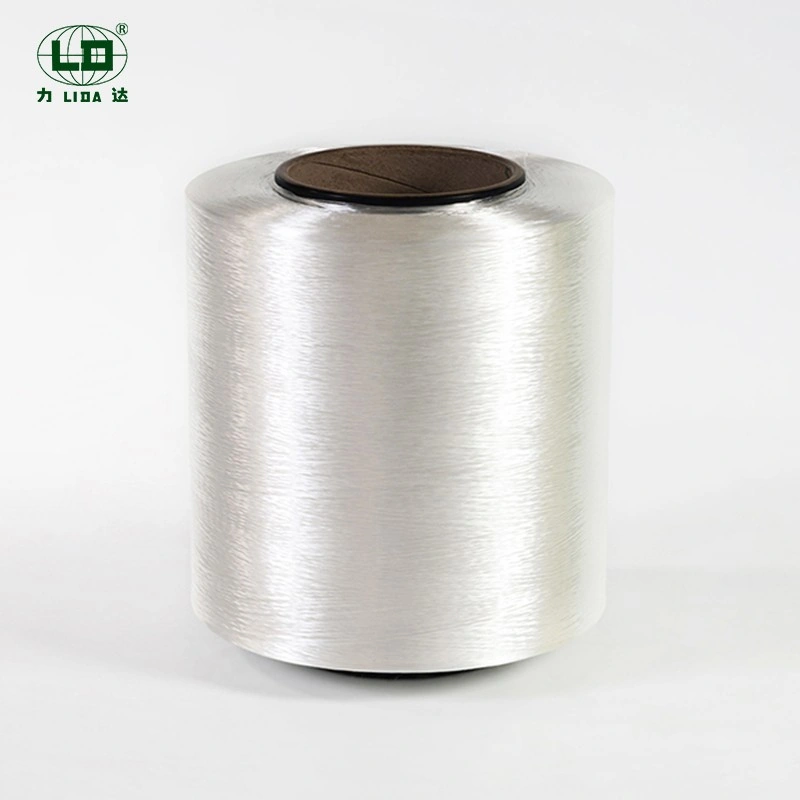
Polyester filament is a versatile continuous synthetic fiber widely used in apparel, home textiles, sewing threads, industrial fabrics, and technical textile manufacturing. This guide explores its basic structure, manufacturing process, common product classifications, mechanical properties, surface characteristics, processing behavior, and industrial applications. It also explains the differences between FDY, dope-dyed, semi-dull, full-dull, high-tenacity, recycled, and functional filament varieties. Practical comparison tables, selection criteria, manufacturing considerations, and frequently asked questions provide a structured understanding of how fiber specifications influence downstream textile performance.
- 01. Understanding Continuous Filament Fibers
- 02. Manufacturing Process and Fiber Formation
- 03. Main Types and Product Classifications
- 04. Important Physical and Mechanical Properties
- 05. Denier, Filament Count, and Yarn Structure
- 06. Processing and Downstream Textile Performance
- 07. Applications Across Different Industries
- 08. Quality Control and Manufacturing Consistency
- 09. How to Select Suitable Yarn Specifications
- 10. Recycled Materials and Sustainable Development
- 11. Functional Fiber Development and Future Trends
- 12. Frequently Asked Questions
1. Understanding Continuous Filament Fibers
Polyester is a synthetic polymer fiber commonly produced from polyethylene terephthalate, also known as PET. Through controlled polymer processing and fiber spinning, the material can be formed into continuous filaments with different diameters, cross-sectional shapes, and physical characteristics.
Unlike staple fibers, which are cut into shorter lengths before spinning, continuous filaments extend along the yarn structure. Multiple filaments can be combined to create a yarn with specific mechanical and surface properties. The number of individual filaments, their fineness, and the way they are processed influence the characteristics of the final textile material.
Understanding Continuous Filament Construction
A filament yarn consists of one or more continuous fiber strands grouped together. Depending on its construction, the yarn may contain a single filament or multiple individual filaments. Multifilament structures are widely used because they offer flexibility in designing yarn fineness, surface appearance, and textile handling characteristics.
During textile manufacturing, the continuous structure can provide several useful characteristics:
- Consistent yarn length and relatively uniform filament construction.
- Adaptable tensile properties for different textile applications.
- Potential for smooth surfaces and controlled luster.
- Compatibility with weaving, knitting, and selected industrial textile processes.
- Flexible options for filament count, cross-section, and functional modification.
Why Polyester Is Widely Used
Polyester has become an important textile material because its properties can be adjusted through polymer formulation, spinning conditions, drawing, finishing, and other manufacturing operations. It generally provides good dimensional stability, useful mechanical strength, abrasion resistance, and resistance to many common environmental influences.
Its relatively low moisture absorption also distinguishes it from natural fibers such as cotton. This characteristic can support quick-drying textile designs, although it also means that moisture management and comfort may need additional consideration in apparel applications.
Another important characteristic is its versatility. Polyester filament can be developed for fine sewing threads, decorative fabrics, high-strength industrial structures, and functional technical textiles. Different specifications serve different purposes, so the material should always be evaluated according to its intended application.
Continuous Filaments
Long, uninterrupted fiber strands provide flexible yarn construction for weaving, knitting, and technical textile applications.
Useful Tensile Strength
Appropriate polymer and drawing conditions can produce fibers suitable for demanding textile structures.
Adjustable Appearance
Different luster levels, cross-sections, and coloration methods allow a broad range of textile effects.
Multiple Product Categories
Filament structures can be adapted for apparel, home textiles, sewing threads, and industrial fabrics.
2. Manufacturing Process and Fiber Formation
Polyester filament manufacturing involves several interconnected stages. The quality of the final yarn depends on raw material preparation, polymer processing, melt filtration, spinning conditions, cooling, drawing, winding, and subsequent inspection.
Each stage contributes to the physical consistency of the filament. Small variations in process conditions may influence filament diameter, tensile behavior, elongation, surface appearance, and package quality.
Raw Material Preparation
Polymer preparation establishes the foundation for stable spinning. Polyester raw materials must meet appropriate purity and processing requirements. Moisture control is especially important because excessive moisture during melt processing can contribute to polymer degradation and changes in molecular weight.
Manufacturers therefore manage raw material storage, drying conditions, material handling, and processing parameters to maintain suitable polymer characteristics before spinning.
Melt Spinning and Filament Formation
In melt spinning, polyester polymer is heated until it becomes a controlled molten material. The melt passes through a filtration system and is then extruded through a spinneret containing multiple small openings.
Each opening forms an individual filament. The resulting strands are cooled and solidified under controlled conditions before being collected into a continuous yarn structure.
Important production considerations include:
- Polymer temperature and melt stability.
- Spinneret condition and extrusion uniformity.
- Filtration efficiency and contamination control.
- Cooling conditions and filament solidification.
- Winding tension and package formation.
Drawing and Molecular Orientation
Drawing is an important stage in developing the mechanical properties of polyester filaments. During drawing, the fiber is stretched under controlled conditions to improve molecular orientation and establish the required physical characteristics.
The drawing process influences tensile strength, elongation, dimensional behavior, and other performance indicators. Different drawing conditions are used depending on the target yarn structure and intended application.
Winding and Final Inspection
After the required processing operations, the yarn is wound into packages suitable for storage, transportation, and downstream textile production. Package shape, winding density, surface condition, and unwinding behavior all affect the usability of the finished product.
Final inspection typically considers yarn linear density, tensile characteristics, elongation, appearance, package condition, and other specifications defined by the product grade.
- Material preparation: Raw materials are selected, handled, and conditioned for controlled polymer processing.
- Melt preparation: Polymer is heated and filtered to achieve suitable spinning conditions.
- Filament extrusion: The molten polymer passes through spinneret openings to form continuous strands.
- Cooling and solidification: Newly formed filaments are cooled under controlled conditions.
- Drawing and processing: Filaments undergo controlled stretching and other specified treatments.
- Winding and inspection: Finished yarn is packaged and evaluated against established quality requirements.
3. Main Types and Product Classifications
Polyester filament products are available in several classifications based on manufacturing method, appearance, mechanical characteristics, coloration, and functional performance. Understanding these differences helps textile manufacturers identify suitable materials for specific production requirements.
Fully Drawn Yarn
Fully Drawn Yarn, commonly abbreviated as FDY, is produced through a process that develops the required molecular orientation during yarn manufacturing. It is generally supplied in a form suitable for direct use in many downstream textile operations, depending on the product specification.
FDY is used in woven fabrics, knitted materials, sewing thread production, and selected industrial textile applications. Its suitability depends on factors such as linear density, filament count, tensile strength, elongation, and surface characteristics.
Dope-Dyed Filament Yarn
Dope-dyed yarn is colored by introducing suitable pigments or colorants into the polymer before filament formation. The coloration process differs from conventional post-spinning dyeing because the color is incorporated during fiber production.
This method can support consistent coloration throughout the filament and is used in applications where color uniformity and particular processing characteristics are important.
Color selection, pigment dispersion, filtration, and spinning stability require careful control. Inadequate dispersion may result in visible color variation or other quality defects.
Semi-Dull and Full-Dull Filament
Filament luster is an important appearance characteristic in textile production. Bright, semi-dull, and full-dull products offer different visual effects depending on their composition and manufacturing conditions.
Semi-dull yarn generally provides a softer appearance than bright filament, while full-dull products are designed to create a more subdued surface appearance. These options allow textile designers to select materials according to the desired visual style of the finished fabric.
High-Tenacity and Low-Shrinkage Yarn
High-tenacity polyester products are developed for applications requiring suitable tensile performance and resistance to mechanical loading. Low-shrinkage variations are designed to control dimensional changes during subsequent thermal or textile processing.
These properties are particularly relevant to sewing threads, industrial fabrics, webbing, reinforcement structures, and other applications where dimensional stability and mechanical consistency are important.
Functional and Specialty Filament
Functional polyester filaments are designed to provide additional characteristics beyond conventional textile performance. Examples include flame-retardant, anti-ultraviolet, high-network, trilobal-shaped, and luminous filament varieties.
These products serve more specialized applications and should be evaluated according to their documented performance requirements and intended operating environments.
| Product Type | Main Characteristic | Typical Application | Important Evaluation |
|---|---|---|---|
| FDY | Fully drawn continuous filament | Woven fabrics and sewing threads | Linear density, tensile properties, elongation |
| Dope-Dyed | Color incorporated during fiber production | Colored fabrics and industrial textiles | Color uniformity and pigment dispersion |
| Semi-Dull | Moderate, subdued luster | Apparel and decorative textiles | Appearance consistency |
| Full-Dull | Reduced surface reflectivity | Matte fabrics and specialty textiles | Luster uniformity and surface quality |
| High-Tenacity | Enhanced tensile performance | Industrial sewing thread and webbing | Breaking strength and elongation |
| Flame-Retardant | Specialized flame-related performance | Selected protective and technical textiles | Applicable flame performance requirements |
| Anti-UV | Improved ultraviolet-related performance | Outdoor and exposed textile structures | UV resistance and weathering behavior |
| Trilobal | Specialized cross-sectional geometry | Decorative and lustrous fabrics | Cross-sectional consistency and appearance |
| Recycled Polyester | Produced using recovered polyester feedstock | Apparel and industrial textiles | Raw material traceability and quality consistency |
4. Important Physical and Mechanical Properties
The performance of a filament yarn is determined by a combination of physical, mechanical, thermal, and surface characteristics. These properties influence how the yarn behaves during weaving, knitting, twisting, sewing, finishing, and long-term use.
Tensile Strength and Elongation
Tensile strength describes the resistance of a yarn to breaking when subjected to a pulling force. Elongation at break indicates how much the material stretches before failure.
These two characteristics are closely related but describe different aspects of mechanical behavior. A yarn with high tensile strength may be suitable for applications involving substantial mechanical loading, while elongation influences flexibility and deformation behavior.
For sewing thread production, tensile properties should be evaluated alongside knot strength, abrasion behavior, and performance during repeated needle movement.
Dimensional Stability and Thermal Shrinkage
Dimensional stability describes how consistently a yarn maintains its dimensions under specified environmental and processing conditions. Thermal shrinkage is especially important because polyester products may experience temperature changes during heat setting, dyeing, coating, or other finishing operations.
Excessive or inconsistent shrinkage can affect fabric dimensions, seam behavior, surface appearance, and the stability of finished products.
For this reason, manufacturers should evaluate shrinkage characteristics according to the actual processing conditions rather than relying on a single specification in isolation.
Abrasion Resistance and Durability
Abrasion resistance describes a material's ability to withstand repeated surface contact and friction. It is particularly important for products such as webbing, industrial sewing threads, fishing nets, and fabrics exposed to frequent handling.
Yarn construction, filament fineness, surface condition, finishing treatments, and fabric structure can all influence abrasion performance. The finished textile should therefore be evaluated under conditions that reasonably represent its intended use.
Moisture Absorption and Drying Behavior
Polyester generally absorbs less moisture than many natural textile fibers. This characteristic can support relatively quick drying, which is useful for various apparel and outdoor textile applications.
However, low moisture absorption does not automatically guarantee superior comfort. Fabric construction, yarn geometry, surface finishing, ventilation, and moisture transport all contribute to the actual wearing experience.
Luster, Surface Appearance, and Handle
Surface appearance is influenced by filament cross-section, luster classification, surface texture, and the arrangement of filaments within the yarn. Bright filaments can create a more reflective appearance, while duller variations provide a softer visual effect.
These differences are important in decorative fabrics, apparel, upholstery, and other products where appearance and texture are significant design considerations.
Mechanical properties should be considered together with processing conditions and final product requirements. A specification that performs well in one application may not be the most appropriate choice for another textile structure.
5. Denier, Filament Count, and Yarn Structure
Linear density and filament count are fundamental specifications in polyester yarn selection. They describe different aspects of yarn construction and influence fabric weight, surface characteristics, mechanical behavior, and processing performance.
What Is Denier?
Denier is a unit of linear density that represents the mass in grams of 9,000 meters of yarn or fiber. A higher denier value indicates a greater mass per unit length, while a lower denier value indicates a finer yarn.
For example, a 150-denier yarn has a nominal mass of 150 grams over a length of 9,000 meters under the defined measurement convention.
Denier is useful when comparing yarn sizes, but it should not be interpreted as a direct measurement of tensile strength or finished fabric thickness.
Understanding Filament Count
Filament count describes the number of individual continuous filaments combined within a yarn. It is often expressed alongside the total denier value.
For example, a 150D/48F construction indicates a nominal total linear density of 150 denier and 48 individual filaments. This information helps describe the basic yarn structure.
Two yarns with the same total denier may have different filament counts. The difference can influence filament fineness, surface characteristics, flexibility, and fabric handle.
How Yarn Structure Influences Fabric Properties
Yarn construction affects how individual filaments interact during downstream processing. Filament arrangement, interlacing, twist, and texturing can change the yarn's cohesion, surface behavior, and handling characteristics.
For instance, a finer multifilament construction may provide a smoother surface and different fabric handle compared with a construction using fewer, thicker filaments. However, the actual outcome depends on the complete yarn specification and processing method.
| Specification | Meaning | Why It Matters |
|---|---|---|
| Denier (D) | Mass per 9,000 meters | Describes total linear density |
| Filament Count (F) | Number of individual filaments | Influences yarn structure and filament fineness |
| Tenacity | Strength relative to linear density | Supports comparison of tensile performance |
| Elongation | Extension before breaking | Influences deformation and processing behavior |
| Shrinkage | Dimensional change under defined conditions | Influences heat treatment and fabric stability |
Choosing Suitable Linear Density
Finer yarns may be appropriate for lightweight fabrics, delicate textile structures, and applications requiring a smooth surface. Higher linear-density constructions may be more suitable for heavier fabrics, webbing, industrial structures, and applications requiring specific mechanical characteristics.
The correct specification should be established through a combination of fabric design, processing equipment, required mechanical performance, and end-use conditions.
6. Processing and Downstream Textile Performance
Yarn quality is only one part of textile manufacturing. The way a filament behaves during downstream processing also determines whether it can consistently produce the intended fabric or finished product.
Different manufacturing methods introduce different mechanical stresses, temperatures, contact conditions, and handling requirements. Understanding these factors helps textile manufacturers select suitable yarn constructions and adjust production parameters.
Weaving Performance
During weaving, warp and weft yarns interact through repeated interlacing. Warp yarns generally experience substantial tension, abrasion, and mechanical movement as they pass through the weaving system.
Yarn strength, elongation, uniformity, surface condition, and unwinding behavior can therefore influence weaving efficiency and fabric quality.
For demanding weaving applications, manufacturers should pay attention to yarn tension control, package construction, filament consistency, and compatibility with the selected loom configuration.
Knitting Performance
Knitting requires yarns to pass through needles and form loops repeatedly. Yarn flexibility, surface friction, uniformity, and package unwinding characteristics can affect loop formation and production stability.
Filament yarns intended for knitting should be evaluated according to the requirements of the knitting machine, fabric construction, and desired textile appearance.
Sewing Thread Manufacturing
Filament yarn is widely used as a raw material for sewing thread production. Depending on the target application, yarn may undergo twisting, doubling, lubrication, heat setting, dyeing, and other finishing processes.
Important considerations include tensile strength, elongation, abrasion resistance, twist consistency, and thermal stability. Sewing threads used in heavy-duty applications may require different specifications from those used in lightweight apparel.
Dyeing and Color Processing
Polyester dyeing commonly involves disperse dye systems and carefully controlled temperature conditions. Dyeing performance can be affected by polymer structure, filament uniformity, yarn construction, pretreatment, and the dyeing process itself.
For dope-dyed products, pigment dispersion and consistency during fiber production become particularly important because coloration is incorporated before the filament is formed.
Heat Setting and Finishing
Heat setting is used in selected textile processes to establish dimensional stability and modify fabric characteristics. Temperature, processing time, tension, and cooling conditions can influence the final result.
Incorrect processing conditions may lead to uneven shrinkage, unwanted deformation, surface irregularities, or changes in mechanical properties.
- Weaving requires appropriate tensile properties and stable yarn delivery.
- Knitting benefits from consistent yarn handling and suitable surface behavior.
- Sewing thread production requires controlled strength, twist, and abrasion characteristics.
- Dyeing requires suitable color processing conditions and uniform material behavior.
- Heat setting requires controlled temperature and dimensional stability.
7. Applications Across Different Industries
The versatility of polyester filament allows it to serve a wide range of textile markets. Product specifications can be adjusted according to the mechanical, appearance, and functional requirements of different applications.
Apparel and Fashion Textiles
Polyester filament is used in a variety of apparel fabrics, including woven materials, knitted structures, linings, decorative fabrics, and selected performance garments.
Its dimensional stability, durability, and adaptable surface appearance make it useful in textile designs requiring consistent fabric construction. Depending on the application, manufacturers may select different luster levels, filament counts, and yarn fineness.
For apparel products, comfort remains an important consideration. Fabric weight, structure, air permeability, moisture management, and finishing treatments should be evaluated alongside the fiber specification.
Home Textiles and Interior Fabrics
Home textile applications include curtains, upholstery fabrics, decorative materials, bedding components, and other household textile products.
These applications may require a combination of dimensional stability, abrasion resistance, appearance consistency, and suitable color performance. The choice of yarn depends on the intended fabric construction and expected usage conditions.
Sewing Thread and Industrial Stitching
Continuous polyester filaments are widely used in sewing thread manufacturing. Sewing thread applications can include garment assembly, upholstery stitching, footwear production, luggage, automotive interiors, and industrial textile fabrication.
Different sewing applications place different demands on thread strength, elongation, friction, and thermal behavior. A suitable yarn specification should support stable thread formation and reliable performance during high-speed sewing operations.
Fishing Nets and Netting Structures
Filament yarn is used in selected fishing net and netting applications where mechanical performance, dimensional consistency, and resistance to repeated handling are important.
Yarn selection should consider the required net structure, mesh dimensions, loading conditions, environmental exposure, and expected service requirements.
Webbing and Reinforcement Materials
Webbing is used in luggage, straps, belts, industrial fastening systems, safety-related textile products, and other reinforced fabric structures.
These applications may require controlled tensile performance, dimensional stability, abrasion resistance, and consistent yarn behavior during weaving and finishing.
Specialty Mesh and Technical Fabrics
Special mesh fabrics are used in filtration-related structures, industrial screens, protective components, and other applications requiring defined textile openings and construction stability.
Filament diameter, yarn construction, and mechanical consistency influence the geometry and performance of the finished mesh. The correct material should be selected according to the required opening dimensions and operating environment.
Wind Energy and Industrial Base Fabrics
Technical textile structures used in industrial reinforcement applications require carefully selected yarn characteristics. Polyester filament may be used in selected base fabrics and reinforcement structures where tensile behavior and dimensional consistency are relevant.
Such applications require a close evaluation of the mechanical loads, textile architecture, resin or coating compatibility where applicable, and the final product's operating environment.
Specialized Functional Textiles
Flame-retardant, anti-ultraviolet, luminous, and other functional filament varieties can be used in specialized textile products. Their selection should be based on the relevant performance requirements, applicable testing methods, and intended end-use conditions.
Changshu Polyester Co., Ltd. develops differentiated polyester and nylon fiber products for various textile and industrial applications. Its product range includes conventional and functional filament varieties, such as dope-dyed, high-tenacity, low-shrinkage, flame-retardant, anti-ultraviolet, and specialized cross-sectional fibers. These product categories address different manufacturing requirements across sewing threads, fishing nets, webbing, specialty mesh, and technical textile structures.
8. Quality Control and Manufacturing Consistency
Consistent yarn quality is essential for stable textile production. Variations in linear density, tensile properties, filament construction, coloration, and package condition can affect downstream processing and finished fabric appearance.
Effective quality management should cover raw materials, production parameters, laboratory testing, package inspection, and finished-product documentation.
Linear Density Testing
Linear density testing verifies whether the yarn meets its specified mass-per-length requirements. Consistency in this measurement helps ensure that the material behaves predictably during weaving, knitting, and other downstream operations.
Tensile and Elongation Testing
Tensile testing evaluates the force required to break a yarn under defined conditions. Elongation testing measures the corresponding extension before failure.
These measurements help manufacturers assess mechanical consistency and determine whether the yarn is suitable for its intended application.
Appearance and Package Inspection
Visual inspection can identify defects such as broken filaments, visible contamination, uneven coloration, package deformation, and surface irregularities.
Package quality also matters because poor winding may cause tangling, irregular unwinding tension, and interruptions during downstream production.
Thermal Shrinkage Evaluation
Thermal shrinkage testing helps determine how the yarn responds to defined temperature conditions. This is particularly important for products intended for heat setting, dyeing, or other thermal processing operations.
Color Consistency and Functional Testing
For colored or functional products, additional tests may be required. These can include color consistency assessment, ultraviolet resistance evaluation, flame-related testing, and other application-specific performance measurements.
Test methods and acceptance criteria should be selected according to the relevant product specifications and applicable industry standards.
| Quality Parameter | Evaluation Purpose | Potential Production Impact |
|---|---|---|
| Linear Density | Verify yarn size consistency | Fabric weight and construction uniformity |
| Breaking Strength | Evaluate tensile performance | Processing stability and product durability |
| Elongation | Measure extension behavior | Mechanical handling and deformation |
| Thermal Shrinkage | Assess dimensional response to heat | Fabric stability and finishing consistency |
| Color Uniformity | Evaluate coloration consistency | Finished fabric appearance |
| Package Quality | Inspect winding and package condition | Unwinding and downstream processing efficiency |
| Functional Performance | Verify specialized product characteristics | Suitability for intended technical applications |
Why Production Traceability Matters
Production traceability helps manufacturers connect finished yarn packages with relevant raw material batches, processing records, inspection results, and production conditions.
This information is valuable when investigating quality variations, managing customer specifications, and maintaining consistency across production batches.
Clear technical documentation also helps downstream textile manufacturers understand the intended processing conditions and performance characteristics of the material they receive.
9. How to Select Suitable Yarn Specifications
Selecting an appropriate yarn requires more than identifying a general fiber category. Manufacturers should define the intended product, downstream processing method, mechanical requirements, appearance expectations, and environmental conditions before finalizing the specification.
When evaluating Polyester Filament Yarn, a structured selection process helps reduce compatibility problems and supports more consistent textile production.
Step 1: Define the Final Application
Start by identifying the finished product. Apparel fabrics, sewing threads, fishing nets, webbing, and industrial reinforcement fabrics have different performance requirements.
For example, a sewing thread may prioritize tensile strength, abrasion resistance, and stable sewing behavior. A decorative fabric may place greater emphasis on luster, filament fineness, and surface appearance.
Step 2: Establish the Required Yarn Construction
Determine the required denier, filament count, and yarn structure. These parameters influence the material's linear density, surface characteristics, and downstream handling behavior.
If a specific fabric construction is already established, the yarn specification should be assessed in relation to the existing production process.
Step 3: Confirm Mechanical Requirements
Identify the required tensile strength, elongation, shrinkage, and abrasion characteristics. These requirements should be based on the expected mechanical conditions during manufacturing and final use.
For specialized applications, it may be necessary to define additional performance criteria and corresponding testing methods.
Step 4: Select the Appropriate Appearance
Determine whether the final product requires bright, semi-dull, or full-dull filament. If color is an important design requirement, evaluate whether conventional dyeing or dope-dyed material is more appropriate.
Surface appearance should be considered alongside dyeing behavior, fabric construction, and finishing requirements.
Step 5: Evaluate Processing Compatibility
Confirm that the yarn can be processed using the intended equipment and production conditions. Consider weaving tension, knitting performance, winding behavior, thermal treatment, and other relevant process variables.
Step 6: Review Quality and Compliance Requirements
Establish the relevant technical specifications, inspection procedures, and applicable certification requirements. For recycled or functional products, additional documentation may be necessary to demonstrate material traceability or specialized performance characteristics.
Step 7: Confirm Packaging and Handling Requirements
Package dimensions, winding structure, net weight, labeling, and storage conditions should be aligned with the downstream production environment.
Appropriate packaging helps protect the yarn during handling, storage, and transportation and supports consistent unwinding behavior during use.
- Application definition: Identify the finished textile and its expected operating environment.
- Construction selection: Establish denier, filament count, and yarn structure.
- Performance requirements: Define strength, elongation, shrinkage, and other technical parameters.
- Appearance requirements: Select suitable luster, coloration, and surface characteristics.
- Process verification: Confirm compatibility with the intended textile equipment.
- Quality documentation: Establish inspection, testing, and compliance expectations.
- Packaging confirmation: Define package specifications and storage requirements.
The most suitable yarn specification is the one that balances mechanical performance, processing compatibility, appearance, and final application requirements. No single specification is ideal for every textile product.
10. Recycled Materials and Sustainable Development
Sustainability has become an increasingly important consideration in textile material development. Manufacturers are exploring ways to improve resource utilization, incorporate recycled feedstocks, reduce unnecessary processing waste, and improve the environmental management of textile production.
Understanding Recycled Polyester
Recycled polyester is produced using recovered polyester materials as feedstock. Depending on the production route, the source material may be processed through mechanical recycling or chemical recycling technologies.
Mechanical recycling generally involves collecting, sorting, cleaning, and processing suitable polyester materials into reusable polymer feedstock. Chemical recycling uses chemical processes to break down polymer materials into components that can be used in subsequent production stages.
Each method has different technical requirements and limitations. The suitability of recycled feedstock depends on material purity, contamination control, processing capability, and the quality requirements of the final fiber.
Quality Considerations in Recycled Fiber Production
Recycled material quality requires careful control because feedstock composition and previous material history may vary. Contamination, polymer degradation, and differences in raw material characteristics can influence the stability of subsequent fiber production.
Manufacturers should evaluate relevant properties such as:
- Feedstock purity and material identification.
- Polymer quality and processing consistency.
- Filament strength and elongation.
- Linear density and dimensional stability.
- Color and surface appearance.
- Material traceability and relevant certification documentation.
Recycled and Virgin Material Selection
Virgin and recycled polyester can both be used in different textile applications. Their suitability depends on the required mechanical performance, product specifications, manufacturing process, and environmental objectives.
It is important not to assume that all recycled polyester has identical characteristics. Material source, recycling method, polymer quality, and manufacturing controls influence the properties of the finished fiber.
Responsible Product Development
Sustainable textile development involves more than changing the raw material source. It can also include improving production efficiency, managing process waste, reducing unnecessary material consumption, and designing products for appropriate service life.
Traceability and transparent product documentation are useful tools for evaluating sustainability-related claims. Certifications should be reviewed according to their actual scope and the specific product or manufacturing facility they cover.
11. Functional Fiber Development and Future Trends
Textile technology continues to evolve as manufacturers develop materials for more specialized performance requirements. Improvements in polymer formulation, spinning equipment, fiber geometry, and functional modification are expanding the range of available filament products.
Advanced Filament Cross-Sections
Conventional polyester filaments often use relatively simple cross-sectional structures. Specialized spinneret designs can produce trilobal and other shaped filaments with different optical and surface characteristics.
These geometries can influence light reflection, fabric luster, surface texture, and the visual appearance of finished textiles.
Functional Modification
Functional polyester products can be developed to address specific application requirements. Examples include flame-retardant, ultraviolet-resistant, luminous, and other modified fiber categories.
Such products require suitable formulation, manufacturing control, and testing. The actual performance should be verified using methods relevant to the intended application.
Improved Process Monitoring
Modern manufacturing increasingly uses automated monitoring systems and digital process management. These technologies can help identify process variations, monitor production parameters, and support more consistent quality control.
Improved monitoring may also help manufacturers identify abnormalities earlier and establish more traceable production records.
Development of Specialized Industrial Fibers
Industrial textile applications continue to require fibers with carefully controlled mechanical and dimensional properties. Examples include reinforcement fabrics, technical meshes, high-performance sewing threads, and specialized webbing.
Material development in these areas often involves collaboration between fiber manufacturers, textile processors, equipment suppliers, and downstream product developers.
Greater Emphasis on Material Traceability
As supply chains become more complex, technical documentation and material traceability are becoming increasingly important. Manufacturers and textile buyers need clear information about product specifications, production characteristics, and relevant quality records.
Consistent documentation helps support product evaluation, process planning, and quality management throughout the textile supply chain.
Integration of Performance and Sustainability
Future textile materials will increasingly need to balance mechanical performance, functional characteristics, production consistency, and responsible material management.
Developing fibers that meet specialized application requirements while maintaining suitable manufacturing characteristics will remain an important direction for the textile industry.
12. Frequently Asked Questions
The following questions explain common technical considerations involving filament structure, product classification, manufacturing, applications, and material selection.
What is polyester filament yarn?
Polyester filament yarn is a continuous synthetic textile material generally manufactured from polyethylene terephthalate polymer. It consists of one or more continuous filaments grouped into a yarn structure. It is used in apparel fabrics, sewing threads, industrial textiles, webbing, fishing nets, and other textile products.
What is the difference between filament yarn and staple fiber?
Filament yarn consists of continuous fiber strands, while staple fiber consists of shorter fiber segments that are generally spun together to form yarn. Their different structures influence yarn construction, surface appearance, processing behavior, and finished textile characteristics.
What does FDY mean in polyester manufacturing?
FDY stands for Fully Drawn Yarn. It refers to a filament yarn produced through a manufacturing process that develops the required molecular orientation during spinning and drawing. FDY is used in various woven, knitted, sewing thread, and industrial textile applications.
What is the difference between semi-dull and full-dull polyester?
Semi-dull and full-dull products differ mainly in their surface luster and visual appearance. Semi-dull filament offers a relatively subdued appearance, while full-dull filament is designed to provide a more matte surface. The appropriate choice depends on the appearance requirements of the finished fabric.
What does 150D/48F mean?
150D/48F indicates a nominal yarn linear density of 150 denier and a construction containing 48 individual filaments. Denier describes the mass per 9,000 meters, while the filament count describes the number of continuous strands within the yarn.
What are the main properties of polyester filament?
Common characteristics include useful tensile strength, dimensional stability, abrasion resistance, relatively low moisture absorption, and adaptable surface appearance. Actual properties vary according to polymer characteristics, yarn construction, drawing conditions, and finishing treatments.
What is dope-dyed polyester filament?
Dope-dyed polyester filament is colored by incorporating suitable pigments or colorants into the polymer before the fiber is formed. This approach can provide coloration throughout the filament and support applications requiring consistent color characteristics.
What is high-tenacity polyester filament used for?
High-tenacity polyester filament is used in applications that require suitable tensile performance and mechanical consistency. Typical applications include industrial sewing threads, webbing, reinforcement fabrics, and selected technical textile structures.
Can polyester filament be used for fishing nets?
Yes. Suitable polyester filament constructions can be used in fishing nets and related netting products. Selection should consider tensile requirements, mesh construction, environmental exposure, dimensional stability, and the expected operating conditions.
What is recycled polyester filament?
Recycled polyester filament is manufactured using recovered polyester materials as feedstock. The production process may involve mechanical or chemical recycling. Product quality depends on feedstock purity, polymer condition, processing controls, and the final yarn specifications.
How should buyers select the appropriate denier?
Denier selection should be based on the finished product, fabric construction, required yarn fineness, mechanical performance, and downstream equipment. Finer yarns may be appropriate for lightweight structures, while higher linear-density constructions may be suitable for heavier or more demanding applications.
Which tests are important for polyester filament quality?
Common evaluations include linear density, breaking strength, elongation, thermal shrinkage, appearance, package condition, and coloration consistency. Functional products may require additional testing based on their intended application and applicable standards.
Can polyester filament be customized for specialized applications?
Polyester filament can be manufactured in different linear densities, filament counts, luster levels, colors, and functional variations. The available customization depends on manufacturing capabilities, product design, raw material requirements, and the intended application.
Conclusion: Making Informed Decisions in Textile Material Selection
Polyester filament is a versatile material whose performance depends on the relationship between polymer characteristics, filament structure, manufacturing conditions, and downstream textile processing. Understanding these factors allows textile manufacturers to select suitable products for different fabric constructions and industrial applications.
From FDY and dope-dyed varieties to high-tenacity, low-shrinkage, recycled, and functional filaments, different product classifications address different manufacturing and end-use requirements. Linear density, filament count, tensile strength, elongation, shrinkage, luster, and package quality all contribute to the suitability of a particular specification.
Successful material selection begins with a clear understanding of the final application. Manufacturers should define their technical requirements, review processing compatibility, establish relevant quality criteria, and maintain appropriate product documentation. These steps help create a more consistent relationship between raw materials, textile production, and finished product performance.
As fiber technology develops, improvements in functional modification, specialized cross-sections, recycled feedstocks, and manufacturing process control will continue to expand the possibilities of polyester textile materials. A careful, specification-based approach remains essential for achieving dependable results across modern textile applications.
Looking for the Right Polyester Filament Solution?
Explore a range of polyester and functional filament products designed for textile manufacturing and industrial applications. Whether your requirements involve FDY, dope-dyed fibers, high-tenacity yarn, low-shrinkage specifications, or specialized functional materials, selecting the appropriate fiber construction is essential for consistent downstream performance.
Share your application requirements, target yarn specifications, and technical expectations with our team to discuss a suitable product solution.
Contact us to discuss your polyester filament requirements and product specifications.