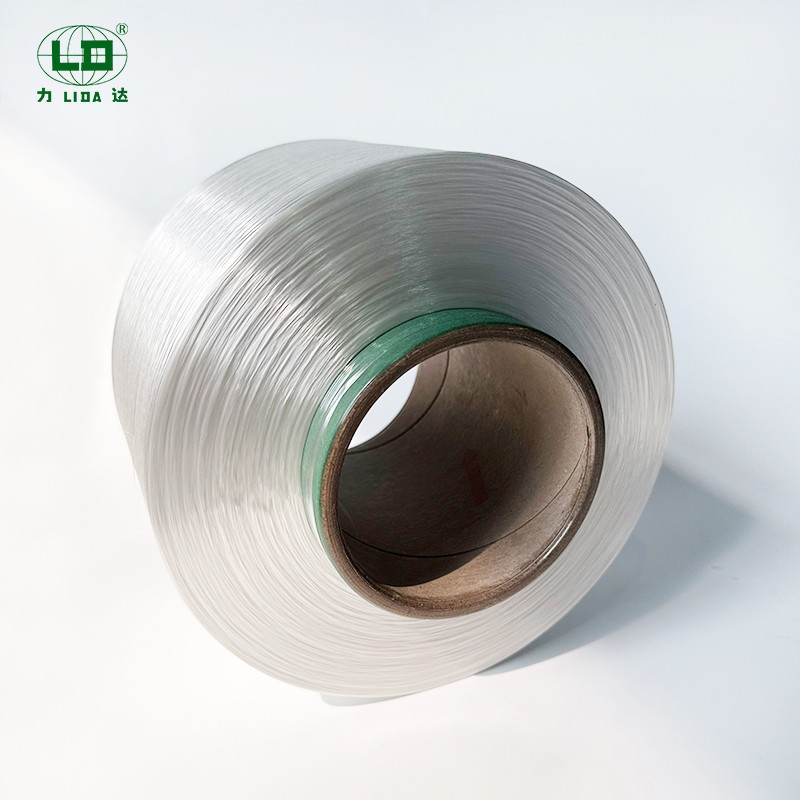
Choosing the right yarn is not a small purchasing decision when your final product must survive tension, abrasion, heat, repeated movement, or long-term outdoor exposure. Polyester Industrial Yarn has become a practical choice for many manufacturers because it offers a reliable balance of strength, dimensional stability, process consistency, and cost control. In this article, we explain what buyers usually worry about before placing an order, how to evaluate yarn beyond price alone, what performance factors matter most in real production, and how to reduce risk when selecting a supplier. We also discuss common industrial applications, specification checkpoints, and why working with an experienced manufacturer such as Changshu Polyester Co., Ltd. can make procurement more predictable and efficient.
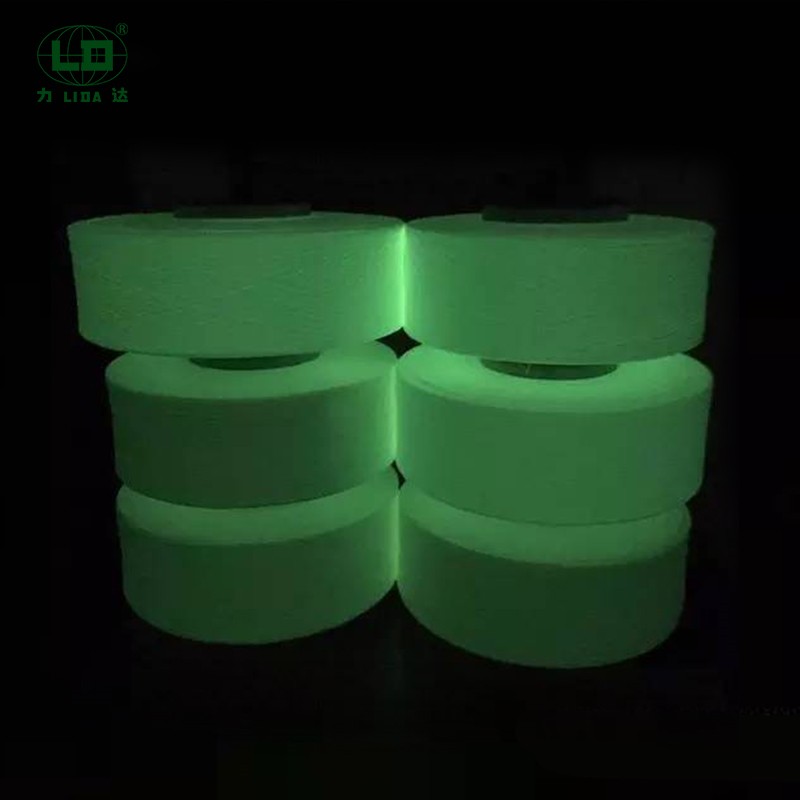
Polyester Industrial Yarn is designed for technical and industrial use rather than ordinary apparel use. That distinction matters. In industrial settings, yarn is not chosen for softness or fashion appeal first. It is selected because it must perform under load, maintain structure during processing, and support the reliability of the finished product. Buyers are often looking for a yarn that can handle demanding production conditions without creating unnecessary waste, machine stoppages, or inconsistent output.
Compared with general-purpose yarn, industrial-grade polyester yarn is more closely judged by tensile behavior, shrinkage control, abrasion resistance, uniformity, and suitability for downstream conversion. Whether it is used in webbing, cords, sewing threads, geotextile-related structures, filtration media, reinforcement materials, luggage components, or automotive-support applications, consistency is everything. A yarn that looks acceptable on paper but performs unevenly in weaving, twisting, winding, or coating can become expensive very quickly.
That is why experienced buyers do not ask only one question, which is price. They ask whether the yarn can stay stable from batch to batch, whether it meets the performance target of the final product, and whether the supplier understands production reality instead of simply listing specifications. A dependable Polyester Industrial Yarn solution should help a factory produce more smoothly, reduce defects, and support long-term customer confidence.
Most procurement decisions in this category begin with a problem. The yarn currently used may break too often. The strength level may be acceptable, but the dimensional stability may be poor. Dyeing or finishing may become difficult because the material behaves unpredictably. Sometimes the issue is not the yarn itself but the lack of consistency between lots, which forces factories to adjust settings repeatedly and wastes valuable time.
Here are some of the most common pain points:
Buyers also worry about hidden costs. A cheaper yarn may appear attractive at quotation stage, but if it increases machine downtime, raises defect rates, or causes customer complaints, it is not truly economical. In practice, the best value often comes from materials that improve process efficiency and reduce risk. That is why the conversation should move from price per kilogram to total manufacturing performance.
A smart evaluation process looks at both laboratory indicators and production behavior. Buyers should ask how the yarn performs not only in a test report, but also on the actual machines and in the actual structure they plan to produce. This is especially important when the yarn will be twisted, woven, knitted, braided, coated, or laminated later.
| Evaluation Factor | Why It Matters | What Buyers Should Check |
|---|---|---|
| Tensile strength | Supports load-bearing performance and process durability | Target strength range, stability across lots, break behavior |
| Shrinkage control | Affects dimensional stability during heat exposure and finishing | Low-shrink demand, thermal response, process compatibility |
| Uniformity | Reduces machine adjustment and quality variation | Denier consistency, package build, lot reproducibility |
| Abrasion resistance | Improves service life in friction-heavy applications | Surface performance, end-use wear expectations |
| Processing behavior | Impacts efficiency in winding, weaving, braiding, and twisting | Break rate, tension control, unwinding smoothness |
It is also wise to request samples for line testing. Technical data is useful, but production trials reveal the truth. A supplier that understands this will usually be more open to detailed communication about intended application, machine conditions, and performance goals. That kind of discussion often prevents mismatch before mass ordering begins.
One reason Polyester Industrial Yarn remains in strong demand is its versatility. Different industries require different balances of strength, appearance, shrinkage, or functionality, and polyester can be adapted to a broad range of technical uses.
| Application Area | Typical Buyer Concern | Preferred Yarn Characteristic |
|---|---|---|
| Webbing and straps | Load stability and long service life | High tenacity and abrasion resistance |
| Sewing and technical threads | Smooth processing and seam reliability | Uniformity and stable tensile behavior |
| Automotive-related materials | Strength under repeated stress | Consistent quality and low shrinkage |
| Luggage and outdoor products | Durability and appearance retention | Abrasion resistance and stable finish |
| Decorative and functional textile structures | Optical effect or special surface performance | Customized filament profile or functional variation |
The right yarn choice depends on where and how the material will be used. For example, buyers focused on tensile demand may prioritize high tenacity. Buyers making dimension-sensitive structures may care more about shrinkage control. Others may need specialty effects, color consistency, or function-oriented variants that support specific end uses. That is why product matching matters more than generic promises.
A strong supplier should do more than send a quotation quickly. The better question is whether they can support repeatable quality, practical communication, and long-term cooperation. When reviewing potential partners, buyers should examine production capability, quality control discipline, response speed, and willingness to understand the end application.
Changshu Polyester Co., Ltd. is a manufacturer name that buyers may encounter when looking for polyester industrial yarn solutions. In supplier evaluation, what matters is the supplier's ability to offer not just products, but confidence. That confidence comes from stable production systems, experience with differentiated and functional yarn development, and the ability to align technical recommendations with actual customer use conditions.
A useful supplier comparison checklist often includes the following:
A supplier who answers these questions well is often worth more than one who competes only on initial pricing.
One of the biggest mistakes is buying industrial yarn as if it were a commodity with no processing context. In reality, even a technically acceptable yarn can fail in practice if it does not match machine conditions, product structure, coating requirements, thermal exposure, or expected service life.
Another common mistake is testing only appearance and ignoring process behavior. A package that looks neat is not necessarily the best choice if it produces unstable tension on the line. Likewise, some buyers focus heavily on short-term cost reduction and underestimate the value of reliable delivery, traceable quality, and communication efficiency.
To lower procurement risk, buyers should:
In industrial sourcing, long-term cooperation often creates better results than constant switching. Once a yarn has been validated in production, consistency becomes a strategic asset. Stable supply helps factories standardize process settings, reduce trial frequency, control quality variation, and build more predictable delivery performance for their own customers.
This is where manufacturer experience becomes especially valuable. When a supplier understands both yarn production and downstream application needs, they can support smoother upgrades, customized solutions, and better troubleshooting when requirements evolve. That makes the relationship more than transactional. It becomes part of the customer's quality assurance system.
For buyers seeking a dependable source of Polyester Industrial Yarn, the goal should not be simply to buy material. The goal should be to secure a supply partner capable of supporting performance, stability, and future product development.
Q1: What is Polyester Industrial Yarn mainly used for?
It is commonly used in technical and industrial applications that require strength, process stability, and reliable long-term performance, such as webbing, cords, technical threads, reinforcement structures, and other durable textile-based products.
Q2: How is Polyester Industrial Yarn different from regular polyester yarn?
Industrial yarn is selected for performance under demanding conditions rather than general apparel comfort. Buyers usually focus on tensile behavior, shrinkage, abrasion resistance, uniformity, and suitability for downstream manufacturing.
Q3: Why is low shrinkage important?
Low shrinkage helps maintain dimensional stability during heat-related processing and in end-use conditions where structure retention matters. It is especially useful when the finished product must keep a consistent shape or tension profile.
Q4: Is the cheapest yarn always the best option for industrial buyers?
Not necessarily. A lower-priced yarn can become more expensive if it increases breakage, machine downtime, quality complaints, or material waste. Smart buyers evaluate total production value instead of unit price alone.
Q5: What should buyers ask a supplier before ordering?
Buyers should ask about specification stability, customization options, lot consistency, trial support, delivery capability, and whether the supplier understands the actual end-use requirements of the application.
The right Polyester Industrial Yarn can improve more than material performance. It can support smoother processing, better product consistency, lower waste, and stronger customer trust. For manufacturers and buyers dealing with demanding production targets, careful yarn selection is a practical way to reduce risk and create long-term value.
If you are looking for a reliable industrial yarn partner with manufacturing experience and product-focused support, Changshu Polyester Co., Ltd. is ready to help. Whether you are evaluating specifications, testing a new application, or planning stable long-term procurement, contact us to discuss your requirements and find the right solution for your project.